Germany vs Gulf for Indian Physiotherapists 2026: Salary, Visa and Career Path
Fast Facts: Life in Germany
€250
Child Support / Kid
30 Days
Paid Annual Leave
"You're probably earning a modest income in India right now. Germany and the Gulf are the two most common destinations Indian physiotherapists consider — but they lead to very different long-term outcomes. Here's how they actually compare.
Quick Answer
The pay difference alone is significant, but it's not the full story. Where Germany and the Gulf really diverge is what happens after year one — whether you're building toward something permanent, or staying as long as your visa sponsor renews your contract.
What Salary Can I Expect in Germany vs the Gulf?
| Location | Average Salary | Tax Treatment |
|---|---|---|
| Germany | €2,700–€3,800/month gross | Taxed (net ~€1,900–€2,700) |
| Gulf countries | €750–€1,750/month | Tax-free |
Germany's gross figure looks larger even before tax, and the gap holds after deductions. The Gulf's tax-free structure narrows the difference somewhat, but doesn't close it — and the gap widens further with experience, since German salaries scale more steeply over a multi-year career than most Gulf contracts do.
Visa and Residency: The Real Difference
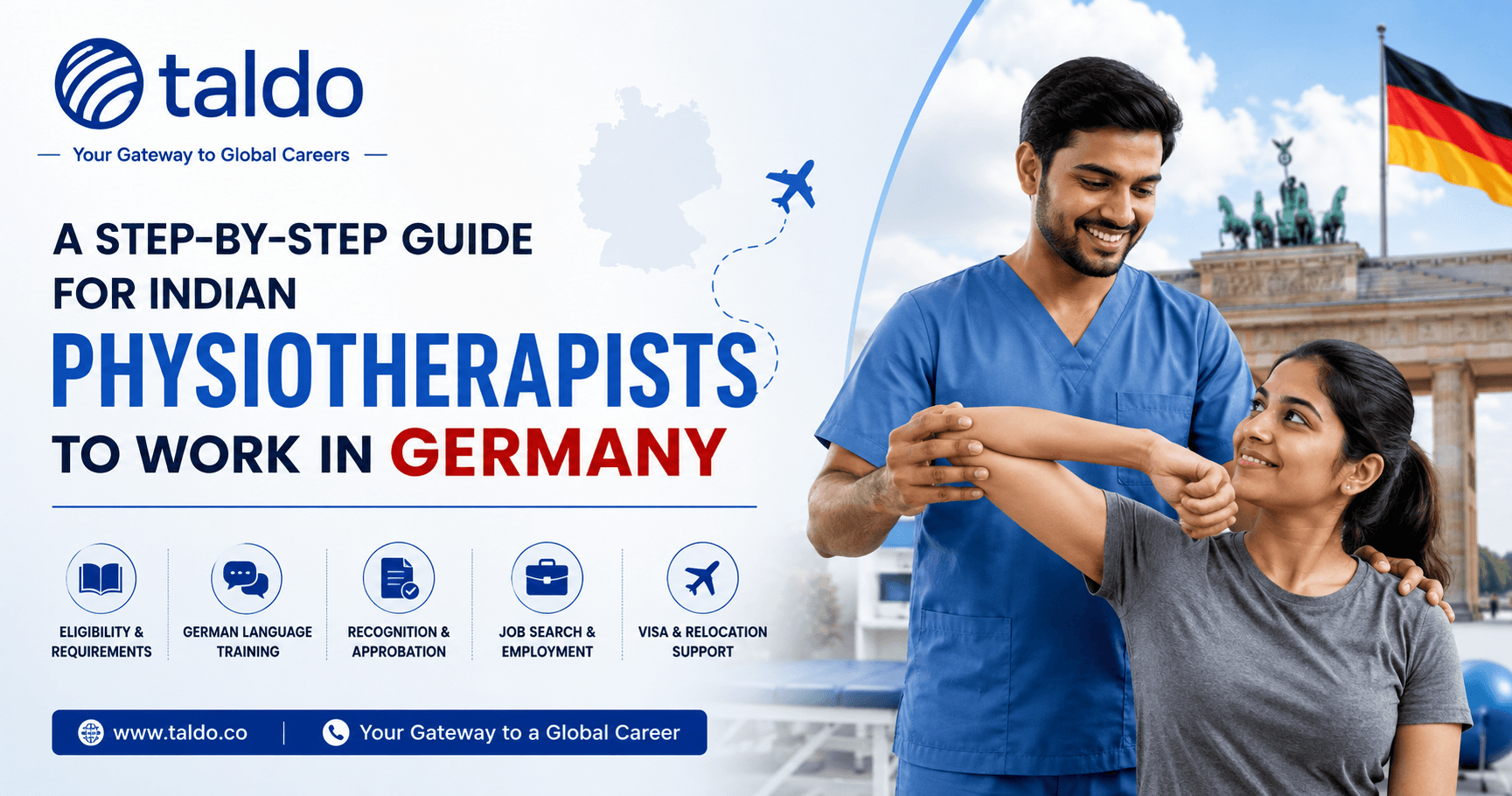
This is where the two paths diverge most. In Germany, physiotherapists typically enter on a Skilled Worker Visa (Fachkräfte-Visum) tied to a recognised qualification and a job offer. After 5 years of legal residence, you can apply for Permanent Residency — a clear, rule-based process.
In the Gulf, work visas are sponsorship-based: your right to stay is tied directly to your employer and current contract. There is no standard pathway to permanent residency or citizenship, regardless of how many years you work there.
| Germany | Gulf | |
|---|---|---|
| Visa type | Skilled Worker Visa / EU Blue Card | Employer-sponsored work visa |
| Residency pathway | Permanent Residency after 5 years | No structured pathway |
| Family reunification | Available once employed | Depends on employer sponsorship |
For a deeper look at how this same comparison plays out for nurses, see our Germany vs Gulf guide for Indian nurses — the visa and residency dynamics are nearly identical across professions.
Career Path: Where Does Each Option Lead?
In Germany, physiotherapists who stay long-term typically progress into specialised clinical roles, rehabilitation leadership, or private practice — supported by a healthcare system that funds continuing education and recognises seniority through structured pay scales. Five years in, you're not just earning more; you're also closer to Permanent Residency and have the option to bring family.
In the Gulf, career progression exists but is generally flatter and more contract-dependent. Salary increases come from renegotiating contracts rather than a structured pay scale, and your long-term security depends entirely on your employer's continued sponsorship.
If your goal is a multi-year career with a clear destination — not just a higher short-term paycheck — Germany's structure is built for that. If your priority is maximising tax-free income over a shorter, defined period, the Gulf can still make sense.
Calculate Your Net Income and Savings
Use the Taldo Germany Salary Calculator to estimate your net income and savings in Germany, and compare it directly against your current salary.
Ready to Take the First Step?
Chat with a Taldo Senior Career Counsellor for free, no commitment, to get honest guidance on which path fits your goals.
Q: How do I know if I'm eligible to work as a physiotherapist in Germany?
Eligibility depends on having your Indian physiotherapy qualification recognised through Anerkennung (the German equivalence assessment), plus B2-level German for clinical communication. The licensing authority in the German state where you plan to work carries out this assessment. Chat with a Taldo counsellor to understand your specific eligibility.
Q: What are the benefits of working as a physiotherapist in Germany compared to the Gulf?
Beyond higher net pay, Germany offers a structured path to Permanent Residency, strong worker protections, and a healthcare system that invests in continuing education and career progression. The Gulf's main advantage is tax-free income, but it doesn't convert into long-term settlement options or family stability the way Germany's system does. Chat with a Taldo counsellor for more information.
Q: How long does it take to learn German and get a physiotherapy job in Germany?
Realistically, 14–18 months from starting German language training to your first day on the job — covering language training to B2, Anerkennung processing, job placement, and visa approval. Starting language training and document collection in parallel is the most effective way to shorten this timeline. Chat with a Taldo counsellor to get a personalised estimate.