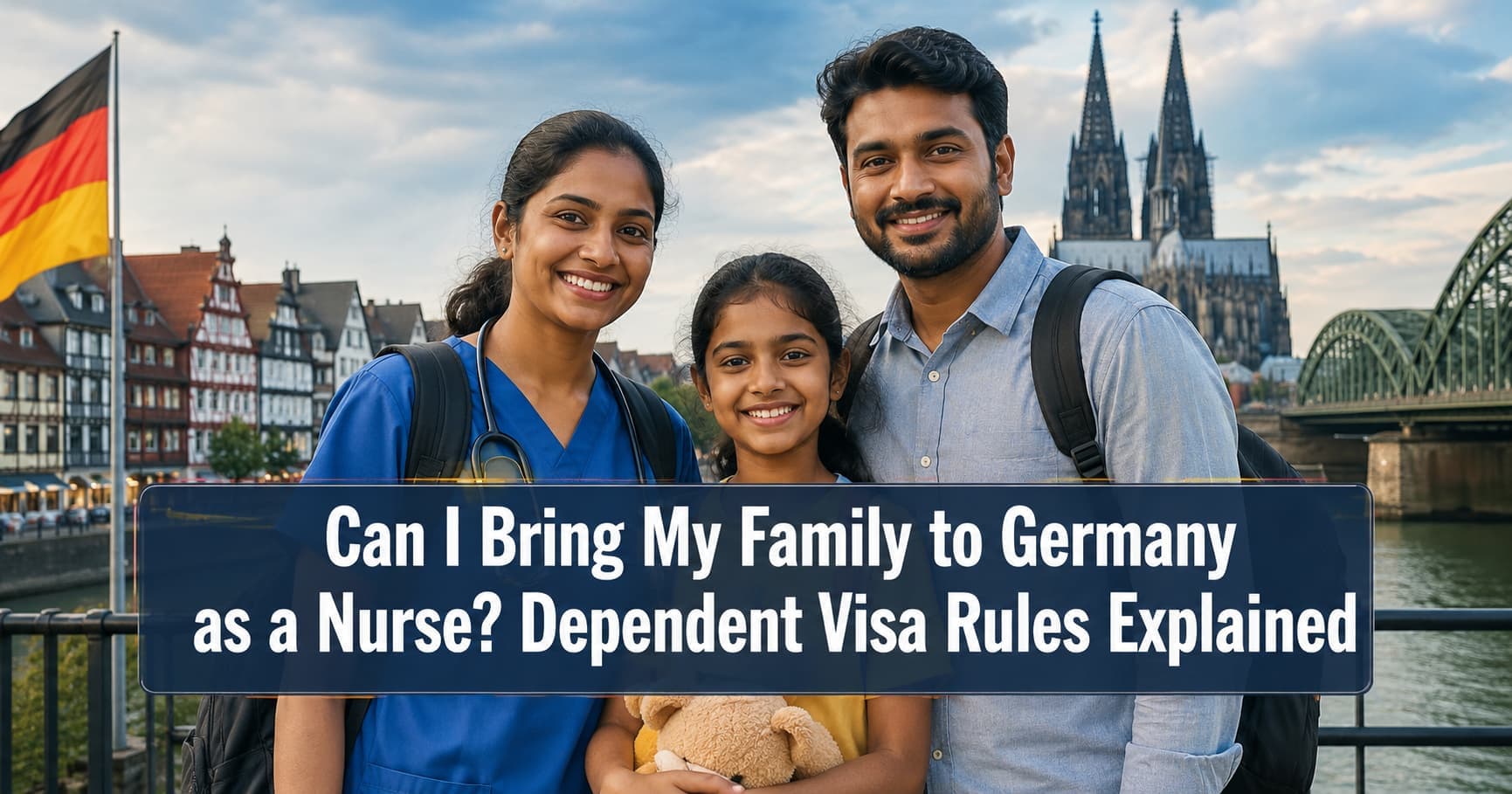
Can I Bring My Family to Germany as a Nurse? Dependent Visa Rules Explained
Fast Facts: Life in Germany
30 Days
Paid Annual Leave
€3,200+
Starting Monthly Pay
"The question every nurse asks after the first month in Germany is when they can bring their family. The answer is not immediate — but it is achievable, and the pathway is clearly defined. This guide covers when you can apply, what is required, and what your family can expect once they arrive.
Quick Answer
Germany's family reunification rules are written into federal law and apply uniformly regardless of which state you work in. As a third-country national (which Indian nurses are), you sponsor your family under the Familiennachzug provisions. The process is bureaucratic but predictable — if you meet the criteria, the outcome is reliable.
When Can You Actually Apply for Family Reunification?
This is the question the blog title implies but most guides avoid answering specifically. The answer has three conditions, and all three must be met simultaneously.
1. You must hold a valid German residence permit. Your Skilled Worker Visa or residence permit must be in force. Nurses on a recognition visa (during the Anpassungslehrgang) can apply once their residence permit has been granted, even before the full nursing licence is issued.
2. You must have adequate income. The rule is that your household income must cover the basic social welfare reference amount (Grundsicherungsniveau) for the combined family size. For a nurse earning €1,700 to €1,900 net per month sponsoring a spouse and one child, this threshold is typically met. The immigration authority will review your last 3 months of payslips.
3. You must have adequate housing. German law requires a minimum of approximately 12 square metres per person in your home. Hospital-provided accommodation often qualifies, but confirm the square footage in your tenancy agreement before applying.
For most Indian nurses, all three conditions are in place roughly 12 to 18 months after arriving in Germany — once the Anpassungslehrgang is complete, the full nursing contract has started, and permanent accommodation has been secured.
Who Can You Bring to Germany?
Spouse or registered partner: Your spouse is the primary beneficiary of family reunification. They receive their own residence permit and have the right to work in Germany from the day they arrive — they are not restricted to any particular employer or sector.
Children under 18: Dependent children under 18 can join you in Germany. Children under 16 have no German language requirement. Children aged 16 to 17 may be asked to demonstrate some German ability, though this is assessed case by case. German state schools are free, and children integrate into the local school system — most schools have German language integration support for newly arrived children.
Parents and grandparents: Reunification with parents or grandparents is possible but subject to strict additional criteria, including demonstrating exceptional hardship. This route is not straightforward and requires legal guidance.
Siblings: Siblings are not eligible for family reunification visas in Germany.
The A1 German Requirement for Spouses
This is the requirement that surprises most nurses. Your spouse must demonstrate A1 German language proficiency before the family reunification visa is issued. A1 is the most basic level — it covers introductions, simple questions, and everyday phrases — and is achievable in 2 to 3 months of focused study.
The A1 exam is available at Goethe-Institut centres across India, including in Mumbai, Pune, Delhi, Bangalore, Chennai, Hyderabad, and Kolkata.
There are exemptions from the A1 requirement in specific circumstances:
- ✦If the sponsor holds a settlement permit (Niederlassungserlaubnis) rather than a temporary residence permit
- ✦If the sponsor holds an EU Blue Card
- ✦If meeting the requirement would cause exceptional hardship (assessed individually)
- ✦If the spouse can demonstrate they are unable to acquire A1 due to illness or disability
For most Indian nurses applying in their first few years in Germany, the A1 requirement applies. The practical advice is to have your spouse begin A1 German study while you are still in the language training phase in India, so they are ready to sit the exam when you are settled enough to sponsor them.
Documents Required for the Family Reunification Application
Your family members apply at the German consulate in India. The core documents are:
| Document | Who Provides It |
|---|---|
| Valid passport (6+ months validity) | Each family member |
| Current German residence permit (copy) | You, the sponsor |
| Marriage certificate (apostilled + certified German translation) | Sponsor + spouse |
| Birth certificates for children (apostilled + certified German translation) | Sponsor + children |
| Proof of income (3 months payslips) | You, the sponsor |
| Proof of accommodation (tenancy agreement or hospital housing letter) | You, the sponsor |
| Proof of health insurance covering family members | You, the sponsor |
| A1 German certificate | Spouse |
German statutory health insurance (gesetzliche Krankenversicherung) automatically covers your spouse and children at no additional premium. You do not need separate private insurance for your family — your existing statutory contribution covers them from the day they register in Germany.
For a complete overview of the visa and residence permit process, read our Germany visa guide for Indian nurses.
What the Process Looks Like Step by Step
Step 1: Confirm eligibility. Check your payslips, housing documentation, and residence permit status. Ensure your spouse has A1 or is preparing for it.
Step 2: Gather and translate documents. All documents must be translated into German by a certified translator. Get apostilles from the relevant Indian government authority — allow 4 to 8 weeks for this.
Step 3: Book the consulate appointment. Family reunification visa appointments at German consulates in India can be booked 6 to 10 weeks in advance. Mumbai, Delhi, Chennai, Bangalore, and Kolkata all have German consulates.
Step 4: Attend the appointment. The consulate reviews all documents and the application.
Step 5: Visa processing. Processing takes 3 to 6 months from the appointment date. More complex cases with missing documents take longer.
Step 6: Your family arrives. On arrival in Germany, family members register at the local registration office (Einwohnermeldeamt) and receive their residence permits. They are immediately entitled to work.
What Happens to Your Family's Status Long Term
Family members who join you in Germany build their own independent residency record. After 5 years of legal residence, they can apply for their own settlement permit (Niederlassungserlaubnis), independent of your status. This means that even if you changed jobs, took a career break, or changed your own permit type, their residency path is their own.
Children who attend German schools from a young age typically integrate well and can pursue German higher education on the same terms as German nationals. University education in Germany is largely free, even for residents who are not citizens.
For a sense of what settling into Germany looks like in practice, read our guide on what to expect in your first month as a nurse in Germany.
Q: Can my spouse work in Germany immediately after arriving on a family reunification visa?
Yes. Since 2018, spouses of skilled workers in Germany have an unrestricted right to work. Your spouse does not need a separate work permit and is not limited to any particular job or sector. They can start working from the day they receive their residence permit in Germany, which is issued shortly after registration at the local office on arrival.Q: What if my spouse cannot pass the A1 German exam before the visa is issued?
The A1 exam can be retaken. If your spouse is finding it difficult, Goethe-Institut offers preparatory courses at all their India centres. If there is a genuine medical or exceptional hardship reason why A1 cannot be acquired, this can be raised with the consulate with supporting documentation. If you hold a settlement permit rather than a temporary residence permit, the A1 requirement for your spouse is waived entirely — another reason to track your PR timeline actively.Q: Does bringing my family affect my income threshold for Permanent Residency later?
The PR income threshold is assessed on your personal income at the time of application, not your household size. Having dependants in Germany does not disqualify you from PR — it is simply a question of whether your nursing salary meets the applicable threshold. At €1,700 to €1,900 net per month, most registered nurses in Germany meet the standard PR income requirement.If you want a clear timeline for when you specifically would be eligible to sponsor your family, chat with a Taldo Senior Career Counsellor on WhatsApp — it is free and based on your actual contract, housing, and residence permit status.