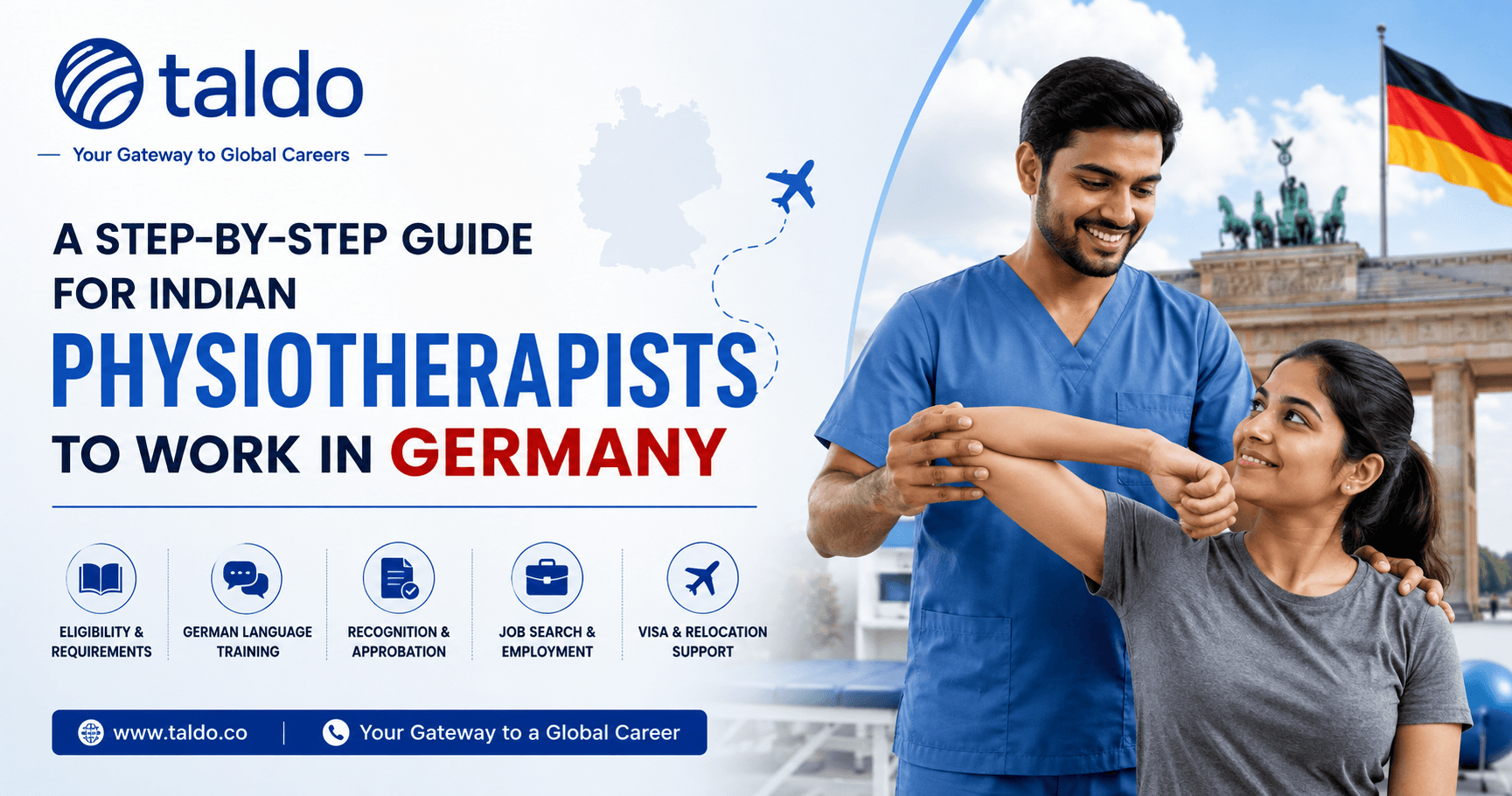
A Step-by-Step Guide for Indian Physiotherapists to Work in Germany
Fast Facts: Life in Germany
5 Years
To German Citizenship
14 Mo
Paid Parental Leave
"Germany needs thousands more physiotherapists, and Indian graduates are increasingly filling that gap. Here's exactly what the journey looks like in 2026.
Germany's healthcare system is under real pressure. An aging population, rising rates of chronic illness, and a shortage of trained rehabilitation staff mean hospitals, clinics, and rehab centers across the country are actively looking to hire physiotherapists from abroad. For Indian physiotherapists with a BPT or MPT degree, this creates a genuine opportunity, but the path involves several distinct stages: degree recognition, German language learning, visa processing, and eventually starting work. This roadmap breaks the whole process down so you know what to expect at each step.
Why Germany Is Looking Abroad for Physiotherapists
Germany's own physiotherapy training pipeline isn't producing enough graduates to keep up with demand. Rehabilitation clinics, hospitals, orthopedic practices, and elderly care facilities all report unfilled positions. This shortage has pushed the government to make it easier for internationally trained physiotherapists to have their qualifications recognized and to enter the workforce, especially from countries like India where physiotherapy education is well established and clinically rigorous.
For Indian physiotherapists, this translates into faster visa pathways, growing employer interest, and, increasingly, structured support programs, like the one Taldo runs, that help candidates navigate recognition and relocation without getting lost in bureaucracy.
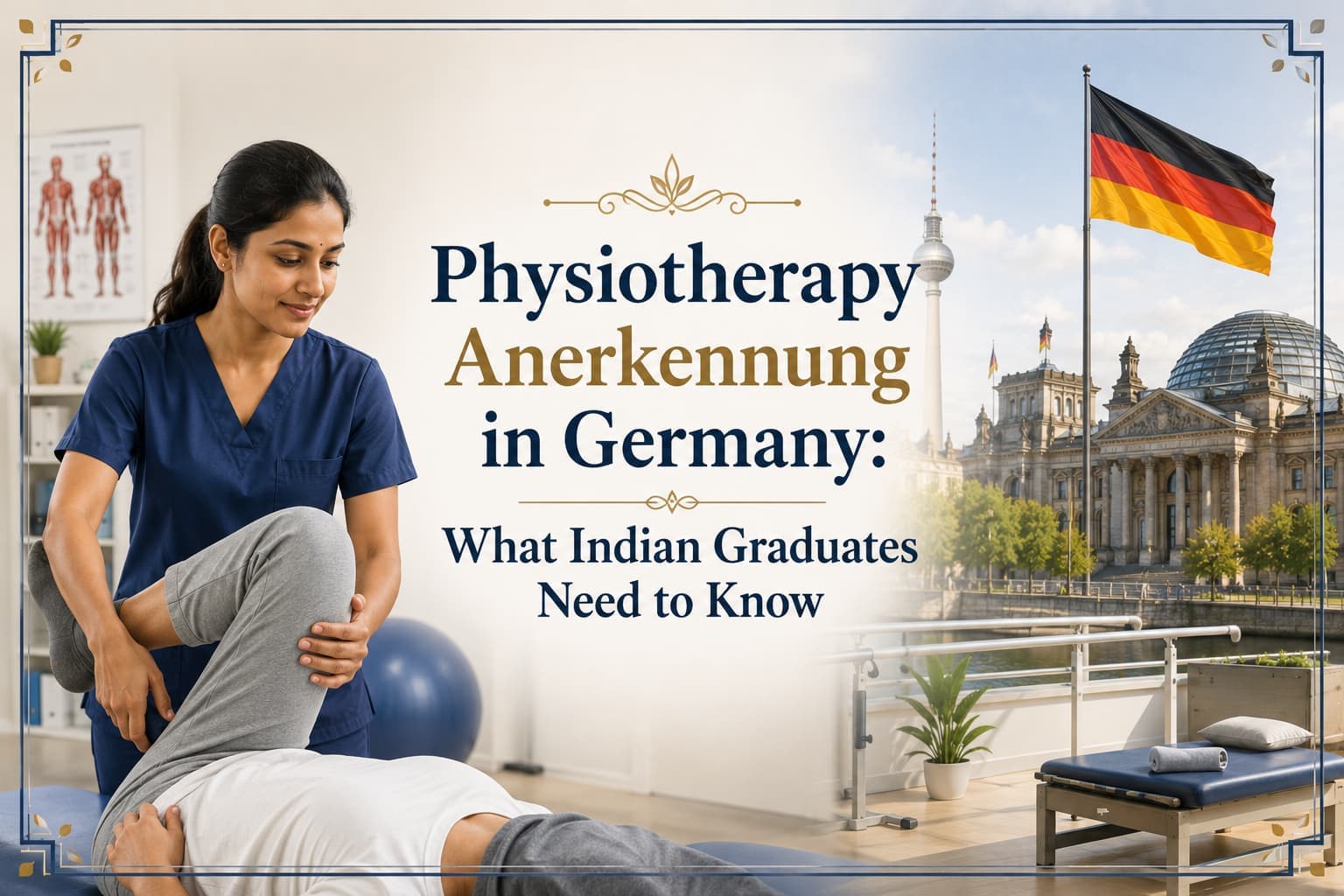
Step 1: Degree Recognition (Anerkennung)
Before you can practice as a physiotherapist in Germany, your Indian degree needs to be formally recognized, a process called Anerkennung. German authorities compare your training hours, subjects covered, and clinical practice against the German Physiotherapist curriculum. Depending on how closely your education matches, you may receive full recognition or be asked to complete an adaptation period or knowledge test to close specific gaps.
This step typically involves:
- ✦Getting your degree certificates and transcripts translated into German by a certified translator
- ✦Submitting your documents to the relevant German state authority (recognition rules can vary slightly by state)
- ✦Receiving an assessment of equivalence, sometimes with conditions attached
Starting this process early matters. Document collection and translation alone can take several weeks, and recognition authorities often have backlogs.
Step 2: Learning German (A1 to B2)
Language ability is non-negotiable for working in German healthcare settings, since physiotherapists communicate directly with patients, doctors, and care teams daily. Most visa and recognition pathways require at least B1, and many employers prefer B2 for full clinical responsibility.
| Level | What You Can Do | Typical Study Time |
|---|---|---|
| A1-A2 | Basic conversation, everyday phrases | 2-4 months |
| B1 | Working conversations, follow instructions | 3-5 months |
| B2 | Full clinical communication, patient interaction | 3-6 months |
Most candidates spend somewhere between 10 and 15 months total reaching B2, depending on their starting point and how intensively they study. Group classes, private tutoring, and immersion apps all help, but consistency matters more than any single method.
Step 3: Visa Application
Once your degree recognition is underway (or complete) and your language certificate is in hand, you can apply for a work or job-seeker visa at the German consulate in India. Required documents generally include:
- ✦Valid passport
- ✦Recognition documentation or proof of application
- ✦Language certificate (B1 or B2)
- ✦Employment contract or job offer, if available
- ✦Proof of financial means and health insurance
- ✦Passport-sized photographs meeting German visa specifications
Visa processing times vary by consulate and season, so it's worth applying with a buffer of a few months before your intended travel date.
Step 4: Arrival and Starting Work
Once you land in Germany, there's an adjustment period. Registering your address (Anmeldung), opening a bank account, and getting a tax ID are early administrative tasks. Many employers, especially those working with structured relocation programs, help new hires through this onboarding so it doesn't feel overwhelming.
Salary expectations for physiotherapists in Germany after recognition are as follows:
| Stage | Gross Monthly Salary | Approximate Net Salary |
|---|---|---|
| Post-recognition physiotherapist | €3,400-€3,600 | €2,300-€2,600 |
These figures reflect standard entry-level positions in hospitals and rehab clinics. Salaries tend to rise with experience, specialization (such as sports physiotherapy or neurological rehab), and additional certifications earned within Germany.
Realistic Timeline: India to Germany
| Phase | Duration |
|---|---|
| Document preparation and translation | 1-2 months |
| Degree recognition process | 3-6 months (can run parallel to language study) |
| German language study (to B2) | 10-15 months |
| Visa application and processing | 2-4 months |
| Total (parallel tracks) | Roughly 14-20 months |
Because recognition and language learning can happen at the same time, the total timeline is usually shorter than adding every step end to end. Candidates who stay organized and get early guidance often move faster than those figuring it out step by step on their own.
Making the Process Smoother
The biggest challenges Indian physiotherapists face aren't usually about clinical skill, since Indian physiotherapy training is generally strong. The friction tends to come from navigating unfamiliar bureaucracy, choosing the right language course, and figuring out which documents each state authority actually wants. This is exactly where structured guidance helps. Many candidates also find it useful to understand how the German healthcare system is structured before they arrive, and to plan their language milestones the way Indian nurses do when preparing for B2-level healthcare communication.
If you're an Indian physiotherapist thinking about making this move, Taldo can guide you through recognition, language planning, and visa steps so you don't have to figure it all out alone.
Q: Do I need a German language certificate before applying for recognition?
No, degree recognition and language study can happen in parallel. However, you will need at least a B1 certificate, and often B2, before you can apply for your work visa and begin practicing.
Q: What happens if my physiotherapy degree isn't fully recognized?
If your qualification only partially matches the German curriculum, you may be asked to complete an adaptation period or pass a knowledge test covering the gaps identified by the recognition authority. This doesn't mean starting your education over, just addressing specific areas.
Q: How much can I expect to earn as a physiotherapist in Germany?
Once your qualification is recognized, physiotherapists typically earn between €3,400 and €3,600 gross per month, which works out to roughly €2,300 to €2,600 net, depending on tax class and location.