A1 to B2: Mastering the German Language for Healthcare Professionals
Fast Facts: Life in Germany
€250
Child Support / Kid
30 Days
Paid Annual Leave
"As a healthcare professional, you're likely no stranger to the challenges of learning a new language, especially when it comes to complex medical terminology. Mastering the German language can seem daunting, but with the right support and resources, you can overcome this hurdle and unlock new career opportunities in Germany, where salaries are significantly higher than in India.
As you consider making the move to Germany, you're probably wondering what it takes to achieve proficiency in the German language. The average duration from A1 to B2 level for language students is 8-10 months, according to The Language Spectrum. This timeline can vary depending on individual factors, such as prior language experience and the intensity of study. Taldo's team advises starting with a solid foundation in the basics and gradually building up to more complex concepts.
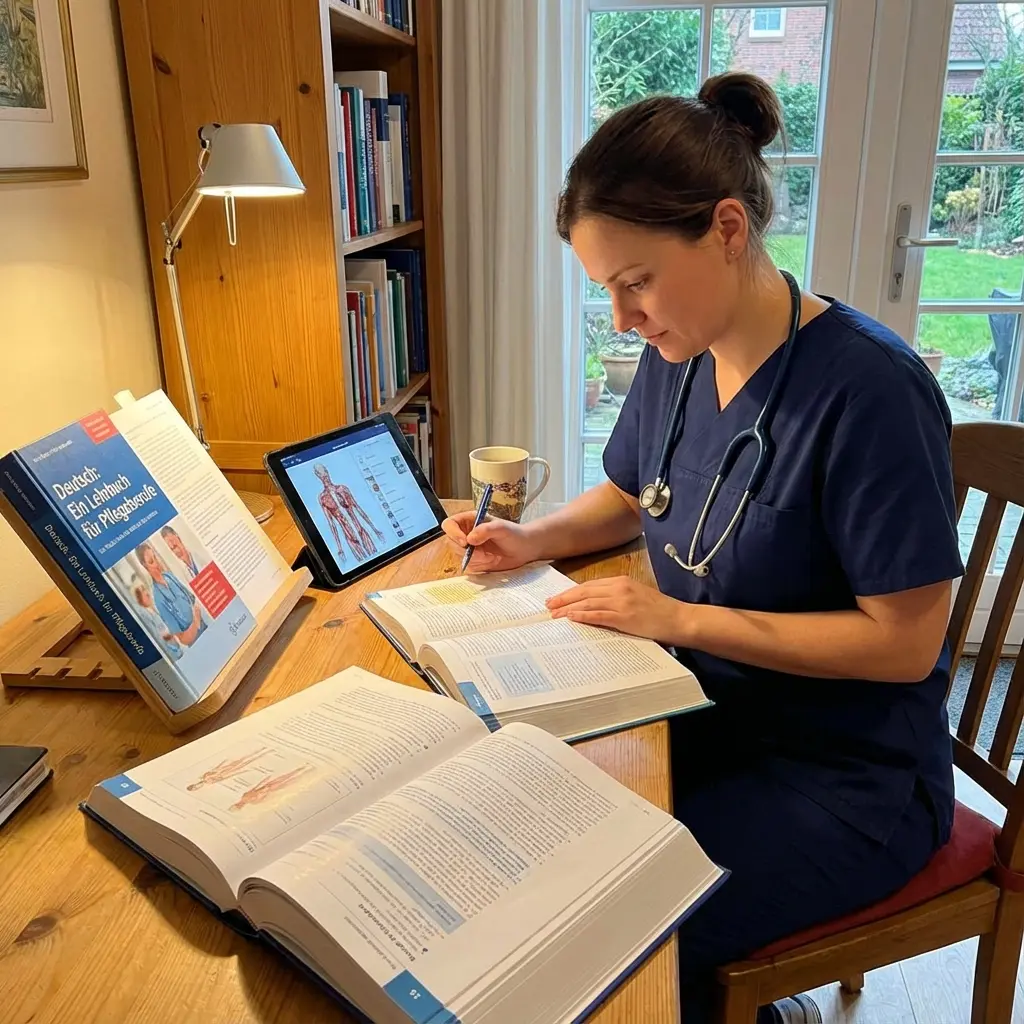
To succeed in the German healthcare system, you'll need to demonstrate a strong grasp of medical terminology and communication skills. Taldo's language program is designed to help you achieve this goal, with certified trainers and a focus on medical vocabulary. By the end of the program, you'll be well-prepared to take the B1 or B2 exam, which is a crucial step in the recognition process for healthcare professionals in Germany.
Understanding the German Language Requirements
The B1 certificate is the minimum requirement for many 'Recognition' (Anerkennung) programs and visa applications for nursing as of 2026, according to GermanOnlineTests. To work as a recognized nurse (Pflegefachkraft) in Germany, you'll need to achieve a B2 level in German, as well as pass the Fachsprachprufung Pflege (specialist language exam), as stated on Sprachschule.
- ✦Language Levels: A1, A2, B1, B2, C1, C2
- ✦Exam Formats: Written and oral components
- ✦Preparation Tips: Practice with native speakers, focus on medical terminology, and use authentic materials
Navigating the Visa Application Process
The Germany Opportunity Card is a points-based visa for skilled professionals, including nurses, according to Next Nation. Additionally, the Germany EU Blue Visa Card is available to nurses meeting higher qualification and salary thresholds. Taldo's team can guide you through the visa application process, ensuring you have all the necessary documents and information to increase your chances of success.
Q: What is the minimum language level required for a visa application?
A: The minimum language level required is B1, but a B2 level is often recommended for better job prospects and to increase your chances of a successful visa application. Taldo advises checking with the relevant authorities for the most up-to-date information.
Calculate Your Net Income and Savings
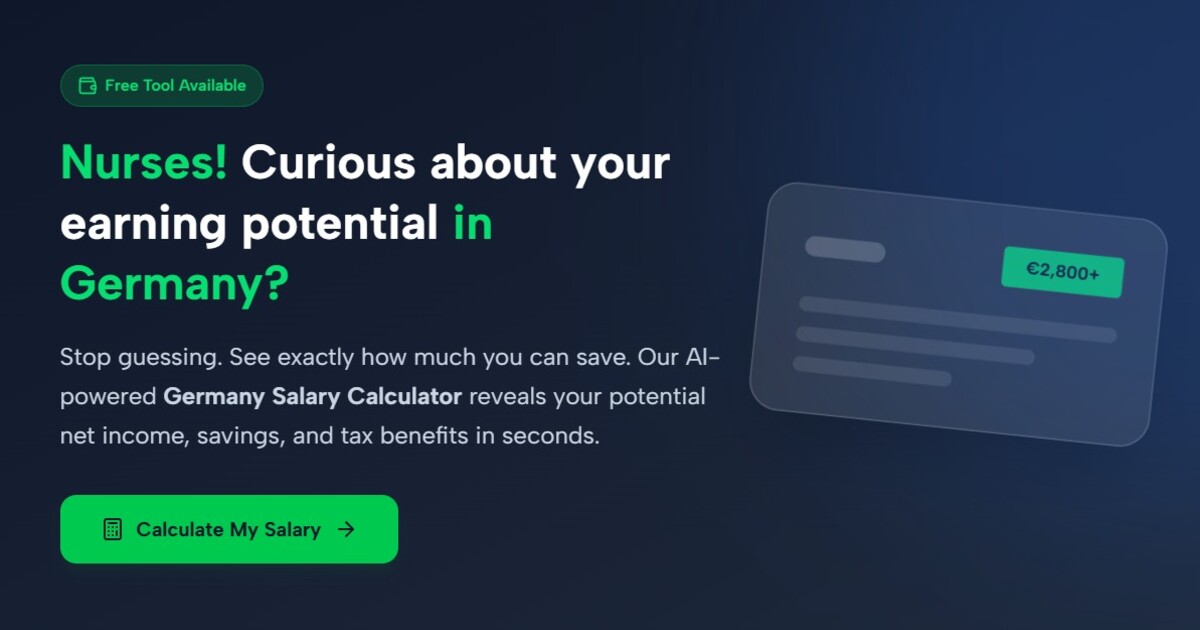
To get an estimate of your potential net income and savings in Germany, try using the Taldo Germany Salary Calculator. This tool can help you plan your finances and make informed decisions about your career.
Ready to Take the First Step?
If you're ready to start your journey to mastering the German language and working in Germany, fill out the enquiry form on Taldo's homepage or book a free "Demo Trial Class" to experience Taldo's German teaching style. You can also join Taldo's official WhatsApp community for updates and peer support.
Key Facts & Statistics
- ✦The average duration from A1 to B2 level for language students is 8-10 months, according to The Language Spectrum (2026).
- ✦TLS students have an 88% pass rate for the B1 level and a 76% pass rate for the B2 level, as reported by The Language Spectrum (2026).
- ✦The B1 certificate is the minimum requirement for many 'Recognition' (Anerkennung) programs and visa applications for nursing as of 2026, according to GermanOnlineTests (2026).
Q: What is the best way to prepare for the B1 or B2 exam?
The best way to prepare for the B1 or B2 exam is to focus on medical terminology, practice with native speakers, and use authentic materials. Taldo's team recommends using a combination of language courses, self-study materials, and practice exams to achieve the best results. Taldo can guide you through this process.
Q: How long does it take to achieve B2 level in German?
The average duration from A1 to B2 level for language students is 8-10 months, according to The Language Spectrum (2026). However, this timeline can vary depending on individual factors, such as prior language experience and the intensity of study. Taldo's team can help you create a personalized study plan to achieve your goals. Taldo is here to support you.
In conclusion, mastering the German language is a crucial step in unlocking new career opportunities in Germany. With the right support and resources, you can overcome the challenges of learning a new language and achieve your goals. Taldo's team is here to guide you every step of the way, from language training to job placement and visa application. Take the first step today and start your journey to a successful career in Germany.