How Long Does It Take to Move to Germany as a Physiotherapist From India?
Fast Facts: Life in Germany
14 Mo
Paid Parental Leave
30 Days
Paid Annual Leave
"Most Indian physiotherapists ask this before they ask anything else: "How many months until I'm actually working in Germany?" The honest answer is that it depends on your German, your paperwork and the recognition outcome, but the range is narrower than you might think.
There is no single timeline for the move. Two physiotherapists with the same BPT can land in Germany a year apart because of one decision: when they started learning German. What you can do is understand the stages, see which ones can run in parallel, and plan around the slowest one. If you want the full process laid out in order, this step-by-step guide for Indian physiotherapists to work in Germany is a good companion to the timeline below.
This guide breaks the journey into stages, gives realistic time ranges for each, and shows where people usually lose months without realising it.
The Short Answer
For most Indian physiotherapists, the full journey from deciding to move to starting work in Germany takes roughly 12 to 24 months. A typical case with a fresh start in German and a standard recognition process lands closer to 15 to 20 months. These are indicative ranges, not guarantees, because every state authority, embassy and employer works at a different pace.
| Scenario | Starting point | Approximate total time |
|---|---|---|
| Faster track | Already at B1 German, documents ready | 10–14 months |
| Typical track | Starting German from zero, documents partly ready | 15–20 months |
| Slower track | Partial recognition, placement or exam delays | 20–28 months |
The biggest swing factor is language. The second is whether your recognition comes through as full or partial.
Stage-by-Stage Timeline
| Stage | Typical duration | Can it overlap with others? |
|---|---|---|
| Research and planning | 1–2 months | Yes |
| Collecting and translating documents | 1–3 months | Yes, with language study |
| German language (A1 to B2) | 8–14 months | Runs through most of the journey |
| Recognition application and decision | 3–6 months | Yes, once documents are ready |
| Compensation measure, if required | 3–6+ months | After the decision |
| Job offer and contract | 1–3 months | Often alongside recognition |
| Visa application and processing | 1–3 months | After offer and recognition steps |
| Travel, registration and settling in | 1 month | After visa |
You do not do these in a straight line. The people who finish fastest run language learning, document preparation and the recognition application side by side.
Stage 1: Research, Planning and Documents (1–3 Months)
This stage looks easy and quietly eats time. You need to understand the process, confirm which German state you will apply through, and start collecting certificates, transcripts, training hours and experience letters. Getting each document certified and translated by a recognised translator can take weeks, especially if your university is slow to issue transcripts.
The single most useful thing you can do here is work from a complete list. Our checklist of documents required for physiotherapists moving to Germany covers recognition, language, visa and arrival papers, and the main lesson from it is simple: start early and keep every name, date and number consistent across files. A single mismatch can send you back to the start of a queue.
Stage 2: Learning German (8–14 Months)
Language is the longest stage for almost everyone. Reaching B2 from zero typically takes around 8 to 14 months, depending on how many hours you study each week, whether you attend structured classes and how quickly you can take the exam dates available near you. Studying part-time while working a full-time job pushes you toward the longer end.
Many physiotherapists wonder whether they can start the process at B1 and finish B2 later. The answer depends on the authority and the stage of the process, so it is worth reading what German B1 and B2 actually mean for Indian physiotherapists before you plan your study calendar. Treat B2 as your working target for clinical practice, and treat anything earlier as a milestone on the way.
Tip: Book exam dates early. Slots near you can fill up, and waiting for the next available date can add weeks.
Stage 3: Recognition (3–6 Months, Plus Any Compensation Measure)
Once your documents are complete, you submit your application to the recognition authority in the relevant German state. Processing times vary widely by state, and incomplete files are the most common cause of delay. The authority compares your BPT with the German three-year physiotherapy training, and understanding what determines whether your BPT is recognised in Germany helps you anticipate the result before it arrives.
There are three possible outcomes:
| Outcome | Effect on your timeline |
|---|---|
| Full recognition | No extra stage; move directly to licence and job steps |
| Partial recognition | Add a compensation measure, usually 3–6 months or more |
| Rejection | Reassess the route, possibly appeal or retrain |
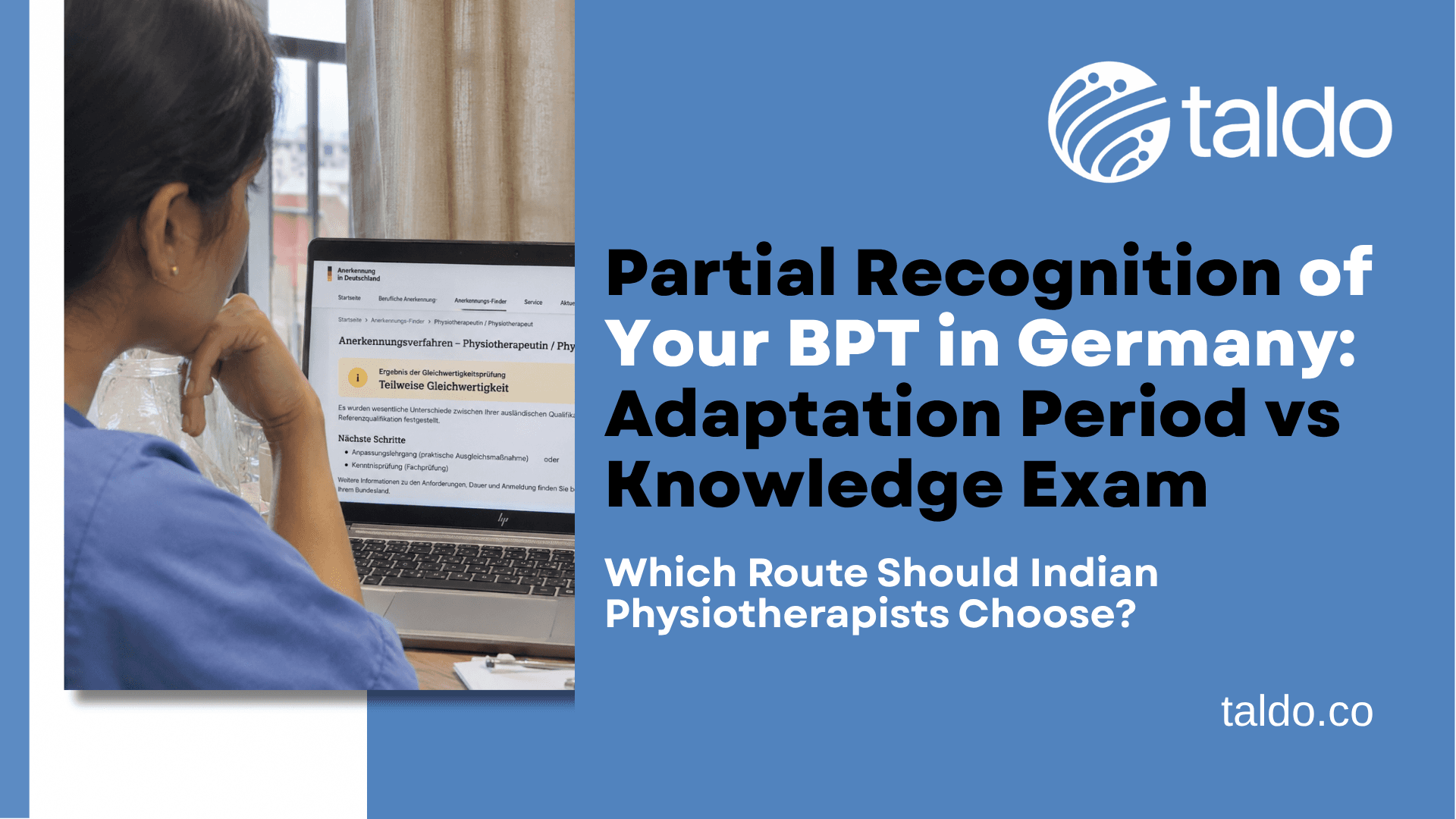
If you receive a partial decision, you will choose, or be assigned, either an adaptation period or a knowledge exam. We have broken down how the adaptation period and the knowledge exam compare after partial recognition, but in timeline terms the difference is simple: the adaptation period is tied to finding a host clinic, while the knowledge exam is tied to your preparation and the next exam date. Either can add several months, so it helps to plan for the possibility from the start rather than treat it as bad news.
Stage 4: Job Offer and Contract (1–3 Months)
You can begin speaking with employers while recognition is in progress. Many German clinics, hospitals and rehabilitation centres are open to hiring internationally trained physiotherapists, and some support the recognition process directly. A good contract states your role, hours and salary clearly.
After recognition, a physiotherapist in Germany typically earns around €3,400–€3,600 gross per month, which comes to roughly €2,300–€2,600 net. If you want to see how that compares with Indian pay once rent and living costs are included, our breakdown of physiotherapist salary in Germany versus India is useful when weighing offers.
Do not rush to accept the first offer. A slightly longer search often leads to a better employer, a clearer contract and a smoother start.
Stage 5: Visa Application and Processing (1–3 Months)
With a job offer and the required recognition documents, you apply for a national visa for employment at the German embassy or consulate. The visa fee is currently about €75. Appointment availability and processing times differ by location and season, so book as early as you can and submit a complete file. Missing or inconsistent papers can send you to the back of the queue, which is why the document preparation in Stage 1 pays off here.
Stage 6: Moving and Settling In (About 1 Month)
After the visa is issued, you still need to arrange travel, accommodation, address registration, health insurance and a bank account. These steps go faster when you prepare in advance, and many newcomers also benefit from a plan for the first weeks, since adapting to a new country is part of the journey, not an afterthought.
Where Time Is Usually Lost
- ✦Starting German late. This is the single biggest cause of delay.
- ✦Incomplete or inconsistent documents. Name spellings, dates and training hours must match everywhere.
- ✦Waiting for one step to finish before starting the next. Recognition, language and job search can overlap.
- ✦Underestimating partial recognition. Plan for it as a possibility, not a surprise.
- ✦Late visa appointments. Book early and keep your file complete.
A Realistic Way to Plan
Work backwards from the slowest stage. If you want to start work by a certain month, count back 12 to 18 months for language and recognition, and begin the first stage now rather than when you feel ready. Each step you start earlier shortens the whole journey, because the stages overlap more than people expect.
If you want help turning this into a personal timeline, Taldo works with German employers and guides Indian physiotherapists through language preparation, recognition and placement. You can message the Taldo team on WhatsApp and describe where you are right now.
Q: How long does it take for an Indian physiotherapist to move to Germany?
Most physiotherapists need roughly 12 to 24 months from starting preparation to beginning work in Germany, with 15 to 20 months being typical. The timeline depends mainly on how quickly you reach B2 German, how complete your documents are and whether your recognition is full or partial.
Q: Can I speed up the process?
Yes. Run language study, document preparation and the recognition application in parallel instead of one after another. Starting German early, keeping your documents consistent and booking exam and visa appointments well in advance are the most effective ways to save time.
Q: Does partial recognition add a lot of time?
It can add several months, because you must complete either an adaptation period or a knowledge exam before full recognition. The exact extra time depends on the gaps listed in your decision, your state and how quickly you can arrange a placement or exam date, so it is wise to plan for this possibility from the beginning.