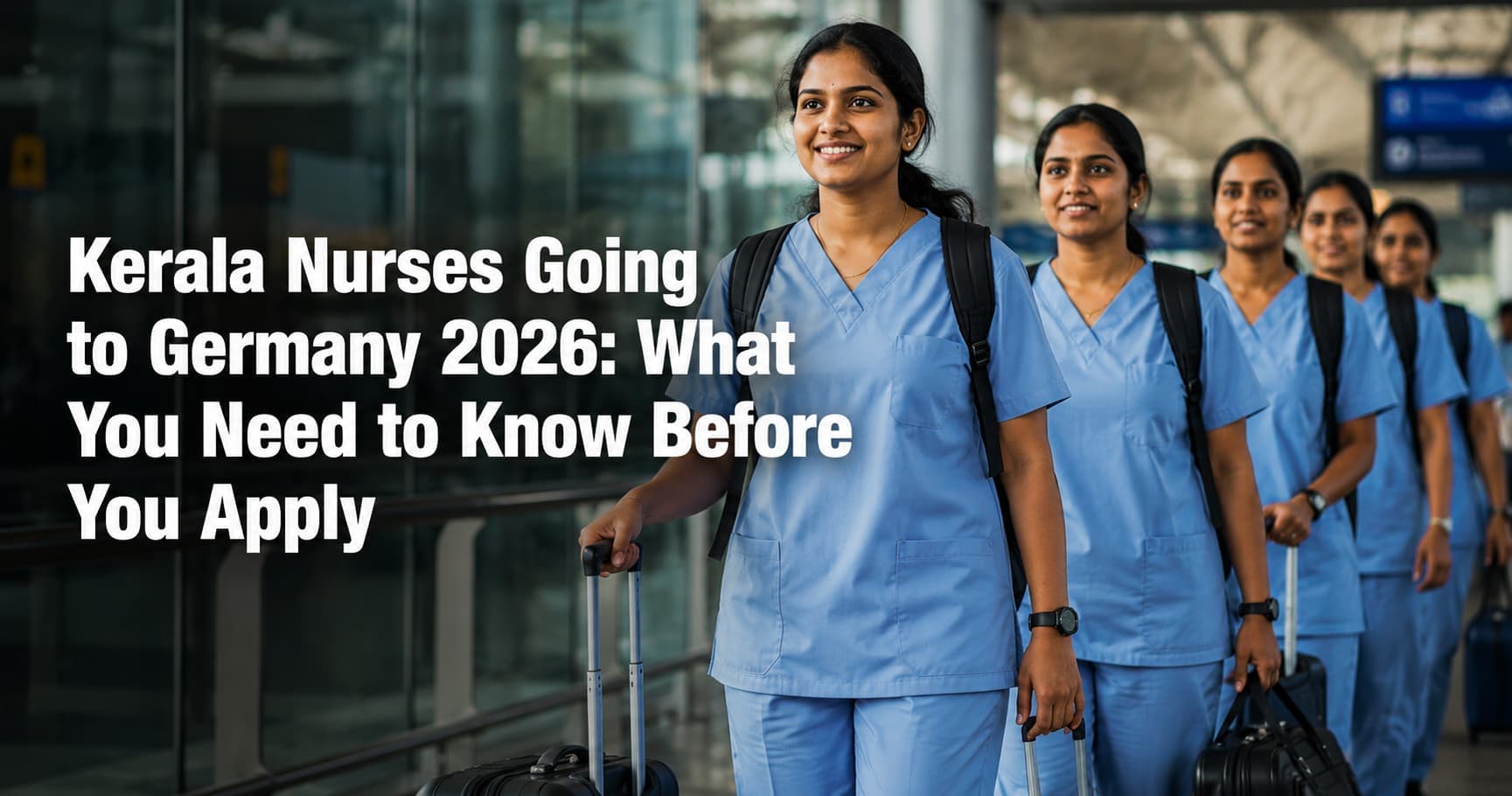
Kerala Nurses Going to Germany 2026: What You Need to Know Before You Apply
Fast Facts: Life in Germany
30 Days
Paid Annual Leave
5 Years
To Permanent Residency
"Kerala has produced more internationally mobile nurses than any other Indian state. The clinical training is strong, the English is fluent, and the appetite to work abroad is high. What Germany adds to that picture is a salary 8 to 10 times what most Kerala nurses earn at home, a formal PR pathway, and working conditions regulated by law. Here is what it actually takes to qualify.
Quick Answer
Kerala nurses are well positioned for Germany. The state has a long history of international nursing migration, strong nursing colleges, and a nursing workforce with significantly more clinical exposure than many other Indian states. Germany's recognition authorities are familiar with Kerala Nursing Council credentials, which makes the documentation process more predictable.
This guide focuses specifically on what Kerala nurses need to know — eligibility, the two pathways available, what you earn, and how the NORKA programme fits into the picture.
Are Kerala Nurses Eligible to Work in Germany?
Yes, subject to meeting the following requirements. These apply to all Indian nurses, including those registered with the Kerala Nursing Council.
Nursing qualification. You must hold a BSc Nursing or GNM qualification from a recognised Indian institution. Post-Basic BSc and MSc Nursing also qualify. Your Kerala Nursing Council registration serves as proof of current licensure and is accepted by German recognition authorities.
German language proficiency. B2 is the mandatory minimum. This is not optional and cannot be substituted with English proficiency. You need to demonstrate B2 through a recognised exam (Goethe-Institut, telc, or ÖSD) before your recognition application can proceed.
Nursing recognition (Anerkennung). Your Indian qualification must be formally recognised by the German state authority where you intend to work. BSc nurses from Kerala generally receive full recognition. GNM nurses typically receive partial recognition, requiring a 3 to 6 month Anpassungslehrgang (bridging course) in a German hospital before your full licence is issued.
Job contract. You need a signed contract from a German hospital employer before you can apply for a visa. Hospital matching typically happens after your recognition decision is known.
Age. The standard working age applies. The practical upper limit for most hospital programmes targeting international nurses is 40 years.
Two Pathways: Direct Recognition vs Ausbildung
This is the most common source of confusion for Kerala nurses researching Germany. These are two completely different routes with different timelines, salaries, and starting points.
Direct Recognition (Anerkennung) — for qualified nurses
This is the pathway for nurses who already hold a BSc or GNM and are registered with the Kerala Nursing Council. You apply to have your existing qualification recognised in Germany. If recognised fully, you work as a registered nurse from day one. If partially recognised, you complete a short bridging course and then work as a registered nurse. This is the correct pathway for the vast majority of Kerala nurses.
| Direct Recognition | |
|---|---|
| Who it is for | Nurses already qualified and registered |
| Timeline | 15 to 20 months total |
| Salary during bridging (if needed) | €1,400 to €1,800/month |
| Salary after full licence | €2,800 to €3,800 gross / €1,700 to €1,900 net |
Ausbildung — for people who want to train as nurses in Germany
Ausbildung is a 3-year vocational training programme for people who want to become nurses in Germany. It is not a recognition process. It is for individuals who either do not hold a nursing qualification or whose qualification cannot be recognised. During Ausbildung, you are a trainee earning a stipend of €1,100 to €1,300 per month. After completing the 3 years and passing the final exam, you qualify as a German-registered nurse.
Most Kerala nurses who hold a valid BSc or GNM should not be choosing the Ausbildung pathway. It is slower, lower-paid during training, and only relevant if your existing qualification is not recognised. If someone is recommending Ausbildung to a qualified BSc nurse, ask why direct recognition is not being pursued first.
For a detailed guide to how recognition works and what to do if you receive a partial recognition decision, read our Anerkennung guide for Indian nurses.
The NORKA Triple Win Programme
NORKA (Non-Resident Keralites Affairs Department) has an active programme facilitating Kerala nurse placements in Germany through the Triple Win initiative, a collaboration between German development agency GIZ and the German Federal Employment Agency. The programme is specifically open to Keralite nurses and handles parts of the recognition and placement process with structured government support.
If you are a Kerala nurse considering Germany, it is worth checking NORKA's current programme status directly. Taldo works alongside such programmes and can help you assess whether a government-facilitated route or a direct Taldo hospital placement is the better fit for your specific qualification and timeline.
What You Earn in Germany as a Kerala Nurse
Registered nurses in Germany earn €2,800 to €3,800 gross per month depending on the state, hospital type, and seniority. After German taxes and social contributions (roughly 35 to 40%), the net take-home is €1,700 to €1,900 per month. At today's exchange rates, that is ₹1,53,000 to ₹1,71,000 every month.
To put that in context against what most Kerala nurses earn: the average government nurse salary in Kerala is ₹25,000 to ₹40,000 per month. Germany's net salary is 4 to 6 times higher, with full healthcare coverage, a state pension, and annual paid leave included.
During the Anpassungslehrgang (if you receive partial recognition), you earn a hospital stipend of €1,400 to €1,800 per month — still significantly more than most Kerala salaries, and you are building your German experience and residency record from day one.
Use the Taldo salary calculator to see your specific net figure based on your expected state and experience level.
Your Realistic Timeline
For a Kerala BSc nurse starting German from zero:
- ✦Months 1 to 12: German language study from A1 to B2. Start document preparation in parallel.
- ✦Month 12: Pass B2 exam, submit Anerkennung application.
- ✦Months 13 to 15: Recognition decision, hospital matching, visa application.
- ✦Month 15 to 16: Arrive in Germany, begin working as a registered nurse.
For a GNM nurse, add 3 to 6 months for the Anpassungslehrgang after arrival, making the total timeline 18 to 22 months.
For a complete month-by-month guide to the full process, read how to get a nursing job in Germany from India in 2026.
Q: Does a Kerala Nursing Council registration count, or do I need a central registration?
Kerala State Nursing Council registration is accepted by German recognition authorities. You do not need a separate Indian Nursing Council central registration, though having both strengthens your application. Your Kerala registration certificate must be current and valid at the time of application.Q: I have been working in the Gulf for several years. Does that experience help my Germany application?
Yes. Post-qualification clinical experience is considered by the recognition authority and can reduce the length of your Anpassungslehrgang if you receive partial recognition. It does not exempt you from the B2 language requirement or the Anerkennung process, but it strengthens your profile for hospital matching and can result in a higher starting salary band.Q: Is it better to apply through NORKA or through Taldo directly?
Both are legitimate routes. NORKA's Triple Win programme is government-facilitated and carries no direct cost, but placement timelines can be longer and hospital choices are more limited. Taldo's direct placement process is faster and gives you more control over which state and hospital you are matched with. The right choice depends on your timeline, flexibility, and how much support you want through the process. Chat with a Taldo counsellor to compare both options for your specific situation.If you want a clear picture of where your Kerala nursing qualification stands and what your realistic timeline to Germany looks like, chat with a Taldo Senior Career Counsellor on WhatsApp — it is free and specific to your qualification and experience.