Where Do Physiotherapists Work in Germany? Hospitals, Clinics, Rehabilitation Centres and Private Practices
Fast Facts: Life in Germany
30 Days
Paid Annual Leave
14 Mo
Paid Parental Leave
"Most Indian physiotherapists picture one kind of job in Germany: a hospital ward. In reality, the profession is spread across five or six very different workplaces, and the one you choose shapes your patients, your hours and how fast you grow.
Before you apply, it helps to know what each setting actually looks like. Two physiotherapists on the same salary band can have completely different weeks, one rotating between hospital wards and the other treating a fixed schedule of outpatients in a small practice. This guide compares the main workplaces so you can match them to your own strengths, language level and long-term plans.
If you are still at the planning stage, our step-by-step guide for Indian physiotherapists to work in Germany shows where choosing an employer fits in the overall process.
The Short Answer
Physiotherapists in Germany work mainly in:
- ✦Hospitals (acute and specialist wards)
- ✦Rehabilitation centres and Reha clinics
- ✦Outpatient practices (Praxen), the largest group by number of workplaces
- ✦Care homes and geriatric facilities
- ✦Specialist centres for children, sports and neurology
- ✦Self-employment, usually after years of experience
Once your qualification is recognised, the typical pay band is around €3,400–€3,600 gross per month (roughly €2,300–€2,600 net), whichever setting you pick. What differs is the structure of the job around that number.
Workplace Comparison at a Glance
| Setting | Typical patients | Pace and structure | Best suited to |
|---|---|---|---|
| Hospital | Post-surgery, ICU, internal medicine, trauma | Shift-based, team-driven, fast-changing caseload | Those who like variety and medical teamwork |
| Rehab centre | Orthopaedic, neurological, cardiac, long-stay patients | Structured daily timetable, longer patient relationships | Those who enjoy tracking progress over weeks |
| Outpatient practice | Sports injuries, back pain, chronic conditions | Appointment-based, often 20–30 minute sessions | Those who prefer steady routines and manual therapy |
| Care home or geriatric unit | Elderly, mobility-limited, dementia | Slower pace, focus on function and safety | Patient, communication-focused practitioners |
| Specialist centre | Children, athletes, neuro patients | Focused on one area, often multi-disciplinary | Those building a clear specialty |
Hospitals: Acute Care and Teamwork
German hospitals employ physiotherapists across surgery, orthopaedics, neurology, internal medicine and intensive care. You often work as part of a multidisciplinary team alongside doctors, nurses and occupational therapists, and your focus is early mobilisation, breathing therapy and preventing complications after surgery.
What to expect
- ✦Working patterns that may include early starts and weekend rotations
- ✦Frequent case discussions and written documentation
- ✦Larger employers often follow collective pay scales, so progression is transparent
Hospitals are a strong choice if you want broad clinical exposure early on. They also demand confident clinical German, because you will handle handovers, team meetings and patient explanations daily. If you are mapping out your language plan, it is worth reading how German B1 and B2 differ for Indian physiotherapists, since hospital roles lean on B2 communication more than most settings.
Rehabilitation Centres: Longer Patient Journeys
Germany has a large rehabilitation sector, driven by an ageing population and a system that places strong emphasis on recovery after surgery, stroke or chronic illness. In a Reha clinic you typically see the same patients over several weeks, which suits physiotherapists who enjoy building a treatment plan and seeing visible progress.
What to expect
- ✦A structured timetable of therapy sessions through the day
- ✦Close collaboration with occupational therapists, speech therapists and doctors
- ✦Strong exposure to orthopaedic, neurological and cardiac rehabilitation
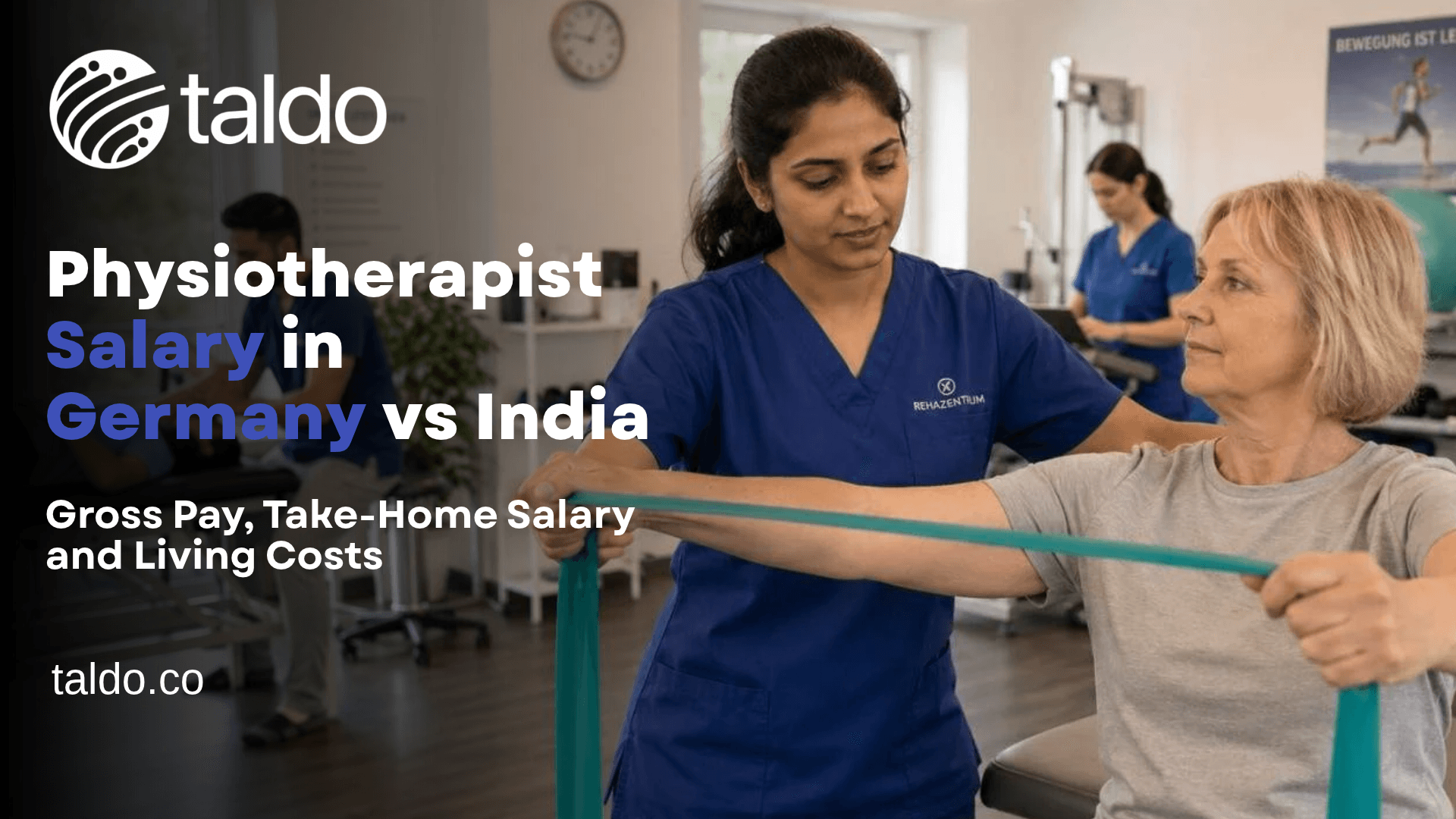
Many Indian physiotherapists find rehab centres a comfortable first step because the rhythm is predictable and the clinical goals are clear. Some centres are also located in smaller towns, where housing is cheaper and your net salary stretches further, something we looked at in our comparison of physiotherapist salary in Germany versus India.
Outpatient Practices: The Backbone of German Physiotherapy
Private outpatient practices (Praxen) are the most common workplace for physiotherapists in Germany. They treat patients referred by doctors for sports injuries, back and neck pain, post-operative care and chronic conditions. Sessions are scheduled in fixed slots, and your day is usually built around one-to-one treatment and manual techniques.
What to expect
- ✦Smaller teams and closer relationships with colleagues and patients
- ✦Regular hours with less shift work than hospitals
- ✦Pay and benefits that vary more from practice to practice, so contracts deserve a careful read
Because there is less standardisation here, it is worth asking exactly how your pay, working hours and any extras are structured. If you are weighing offers, the factors we outlined in our guide to what Indian physiotherapists actually earn in Germany will help you compare them sensibly rather than just by headline figure.
Care Homes and Geriatric Settings
With an older population, demand for physiotherapy in care homes and geriatric units keeps growing. The work centres on maintaining mobility, preventing falls and supporting independence in daily life. The pace is gentler than in hospitals, and communication skills matter as much as technique, particularly with patients living with dementia.
This setting often suits physiotherapists who value long-term relationships and meaningful functional improvement. It also helps to understand how patients are funded and covered, which is why our overview of the German healthcare system, public versus private is a useful background read before you start.
Specialist Centres: Children, Sports and Neurology
Beyond the main four, many physiotherapists work in specialist environments such as paediatric centres, sports medicine clinics and neurological units. These roles typically ask for deeper experience or additional training, but they offer a clear specialisation and, over time, stronger career prospects. Many people build toward them by starting in a hospital or rehab centre and then moving into a focused area once their German and experience are solid.
Self-Employment and Your Own Practice
After several years of experience, some physiotherapists open their own practice. This route offers independence and higher earning potential, but it also brings administrative work, investment and the need for a full understanding of the local system. For most newcomers, it is a later goal rather than a starting point.
How to Choose Your First Workplace
A practical way to decide is to ask four questions:
| Question | Why it matters |
|---|---|
| How strong is my German right now? | Hospitals and specialist roles demand confident clinical communication |
| Do I want routine or variety? | Practices and rehab centres are structured, hospitals more varied |
| Which city or region suits my budget? | Smaller towns often have lower rent, so your savings grow faster |
| Will my employer support recognition? | Some employers help with adaptation periods and paperwork |
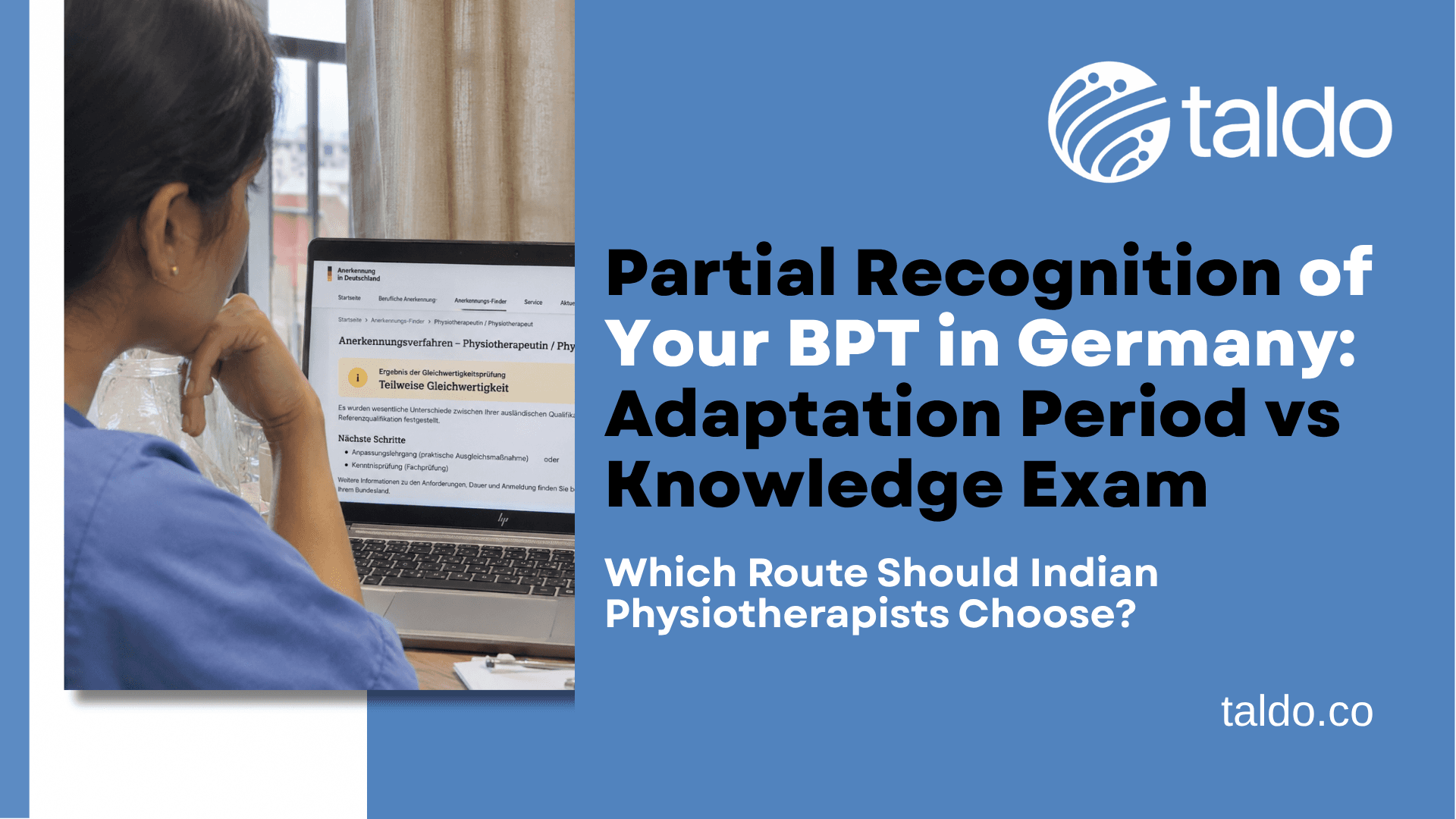
That last point matters more than many people realise. If your BPT receives partial recognition, you may need a supervised adaptation period in a host clinic or a knowledge exam. We explained how those routes work in our guide to partial recognition of the BPT in Germany, and an employer who has hosted international physiotherapists before can make that stage far smoother.
Before You Apply: Recognition, Documents and Timing
Whichever setting you choose, employers will ask about your recognition status and your documents. It helps to understand what determines whether a BPT is recognised in Germany before you start applying, and to keep your file ready using our checklist of documents required for physiotherapists moving to Germany. Allow time as well: the full journey typically takes 12 to 24 months, as we set out in our timeline for moving to Germany as a physiotherapist, so the sooner you begin talking to employers, the better.
Talk to People Who Place Physiotherapists Every Day
Choosing where to work shapes your first years in Germany, and a good match between you and your employer makes recognition, settling in and progression much easier. Taldo works with German employers and guides Indian physiotherapists through language preparation, recognition and placement. You can message the Taldo team on WhatsApp to talk through which setting fits your background.
Q: Where do most physiotherapists work in Germany?
Most physiotherapists in Germany work in private outpatient practices, followed by hospitals and rehabilitation centres. Smaller numbers work in care homes, specialist centres for children, sports or neurology, and in their own practices after gaining experience.
Q: Does my salary depend on the type of workplace?
After recognition, a physiotherapist typically earns around €3,400–€3,600 gross per month, but how pay is structured differs by employer. Larger institutions often follow collective pay scales, while smaller practices vary more, so always read the full contract and ask about allowances, hours and progression.
Q: Which workplace is best for a newly arrived Indian physiotherapist?
There is no single best option, but many newcomers start in rehabilitation centres or outpatient practices because the routine is more predictable. Hospitals offer broader exposure but demand stronger clinical German, so the right choice depends on your language level, recognition outcome and career goals.