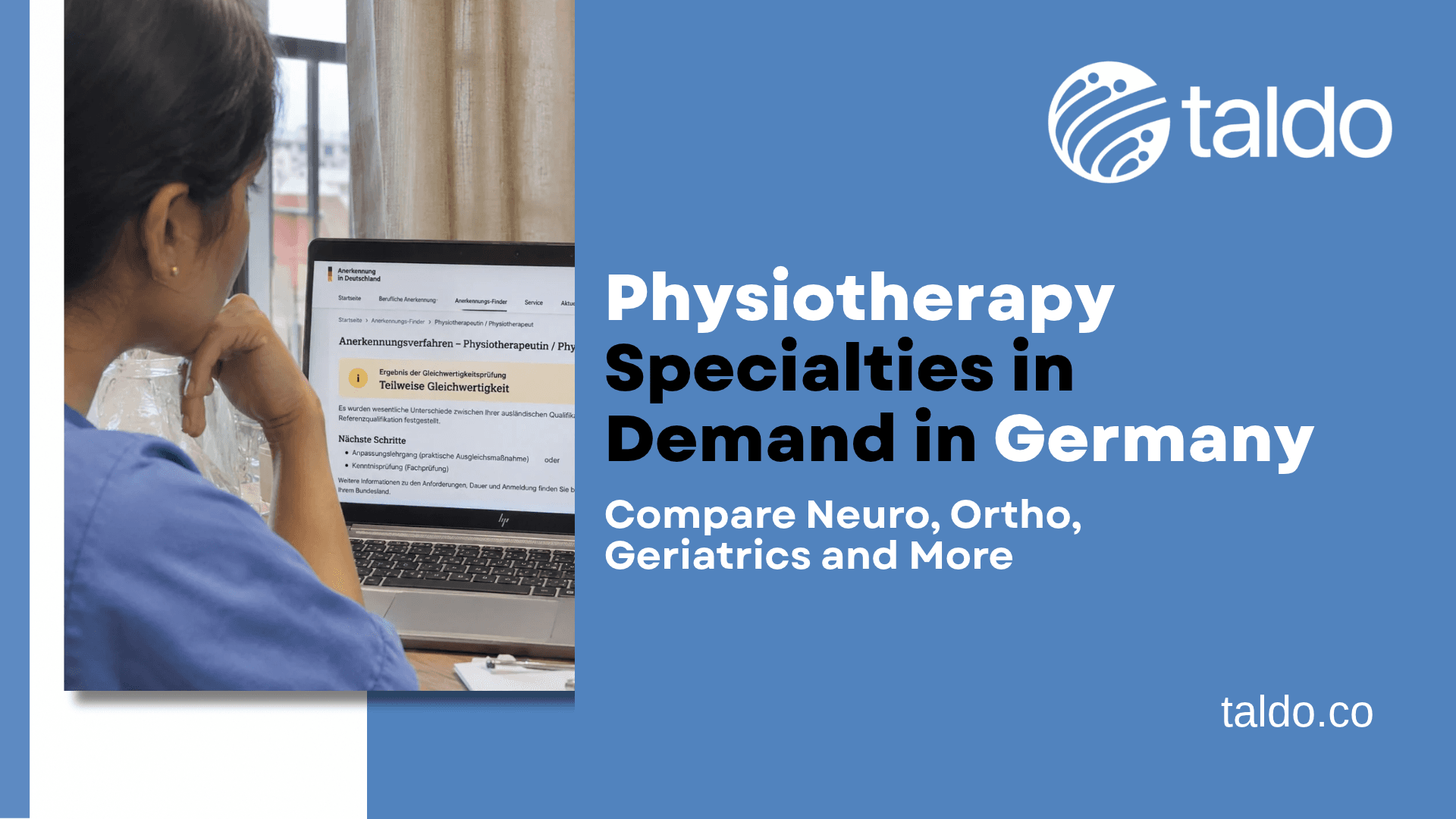
Physiotherapy Specialties in Demand in Germany: Neuro, Ortho, Geriatrics and More
Fast Facts: Life in Germany
€3,200+
Starting Monthly Pay
5 Years
To Permanent Residency
Title: Physiotherapy Specialties in Demand in Germany: Neuro, Ortho, Geriatrics and More Meta: Which physiotherapy specialties are in demand in Germany? Compare neuro, ortho, geriatrics, pediatrics and more, plus how Indian physios can build a specialty. Blog:
"Getting recognised and landing your first job in Germany is only the start. Where you go next depends on the specialty you build, and some areas of physiotherapy are growing much faster than others.
Most Indian physiotherapists plan their move around one question: how do I get there? Fewer ask the follow-up: what kind of physiotherapist do I want to be once I am there? In Germany, that second question matters more than many people expect, because the system rewards additional training and because patient needs are shifting quickly.
This guide looks at the specialties that are most visible in German physiotherapy today, what each involves, and how a newly arrived Indian physiotherapist can move toward one. We describe general patterns here rather than exact vacancy counts, because demand varies by region and employer.
The Short Answer
Physiotherapy demand in Germany is broad, but five areas stand out because of demographics and the structure of the healthcare system:
- ✦Neurological rehabilitation, driven by stroke care and chronic neurological conditions
- ✦Orthopaedic and sports physiotherapy, the backbone of outpatient practice
- ✦Geriatric physiotherapy, driven by an ageing population
- ✦Cardiopulmonary and intensive care physiotherapy, mostly hospital-based
- ✦Paediatric physiotherapy, a smaller but consistently needed specialty
Whichever you choose, the pay band for a recognised physiotherapist is around €3,400–€3,600 gross per month (roughly €2,300–€2,600 net). Specialisation tends to affect your role, responsibility and progression more than your starting salary.
Why Demand Is Growing
Three forces shape what German employers are looking for:
- ✦An ageing population. Older patients need mobility support, fall prevention and rehabilitation after illness or surgery.
- ✦A strong rehabilitation culture. Recovery after surgery, stroke or chronic illness is treated as a core part of care, not an optional extra.
- ✦A steady flow of prescriptions. Doctors refer patients for physiotherapy in large numbers, which keeps outpatient practices busy.
These patterns are why we describe the job market in terms of settings as well as specialties. If you have not yet compared workplaces, our overview of where physiotherapists work in Germany shows how hospitals, rehab centres and outpatient practices differ, and each tends to favour certain specialties.
Specialties at a Glance
| Specialty | Typical patients | Common settings | Typical extra training |
|---|---|---|---|
| Neurological | Stroke, Parkinson's, MS, spinal injury | Rehab centres, hospitals, specialist clinics | Bobath, PNF, Vojta, neuro courses |
| Orthopaedic and sports | Post-surgery, back pain, sports injuries | Outpatient practices, clinics, sports centres | Manual therapy, medical training therapy |
| Geriatric | Frailty, falls, dementia, mobility loss | Care homes, geriatric units, home visits | Geriatric rehab, fall prevention courses |
| Cardiopulmonary and ICU | Post-operative, COPD, ventilated patients | Hospitals, pulmonary rehab | Respiratory therapy courses |
| Paediatric | Developmental delay, cerebral palsy | Specialist centres, practices | Vojta, Bobath, paediatric courses |
| Women's health and pelvic floor | Pregnancy, postpartum, incontinence | Practices, women's health centres | Pelvic floor certification |
Neurological Physiotherapy
Neurological rehabilitation is one of the most structured and in-demand areas, because stroke and chronic neurological conditions require long, repeated treatment. Rehab centres run daily therapy programmes, and patients often stay for several weeks, which lets you see real progress.
Many physiotherapists in this field hold additional training in concepts such as Bobath or PNF, and Vojta is widely used in neurological and paediatric care. For Indian physiotherapists with neurology exposure in their BPT or internship, this is a natural path, though clinical German matters a great deal here, since you must explain exercises clearly and read patient responses in real time. Our comparison of German B1 versus B2 for Indian physiotherapists explains why reaching a strong B2 is essential before taking on specialised clinical work.
Orthopaedic and Sports Physiotherapy
Orthopaedic and musculoskeletal care makes up a large share of outpatient work. Patients arrive with back and neck pain, post-operative recovery, joint problems and sports injuries, and treatment is built around manual techniques and exercise.
This is also where additional certificates have a visible effect. Manual therapy and medical training therapy are common add-ons, and many practices value therapists who can offer them. If your BPT had a strong musculoskeletal focus, you may find this the quickest specialty to settle into, particularly in practices where routines are predictable. Understanding what determines whether your BPT is recognised in Germany also helps you see which parts of your training the authority will treat as strengths.
Geriatric Physiotherapy
With an older population, geriatric physiotherapy is growing steadily. The focus is on maintaining independence, preventing falls and supporting everyday function, often in care homes, geriatric units or through home visits.
The pace is gentler than in hospitals, and communication skills matter as much as technique, especially with patients living with dementia. Many newcomers find this a rewarding specialty because the patient relationships are long and the results are practical and visible. It also helps to understand how patients are covered and referred, which our overview of the German healthcare system, public versus private explains.
Cardiopulmonary and Intensive Care Physiotherapy
Hospital physiotherapists often work with patients after surgery, with respiratory illness or in intensive care. Tasks include breathing therapy, early mobilisation and preventing complications such as pneumonia and muscle loss.
These roles usually sit inside multidisciplinary teams, with daily handovers and documentation, so confident German is essential. They suit physiotherapists who enjoy fast-changing caseloads and teamwork with doctors and nurses, and who are comfortable with shift patterns.
Paediatric Physiotherapy
Paediatric physiotherapy is a smaller field, but it is consistently needed. Physiotherapists work with children who have developmental delays, cerebral palsy or other conditions, often alongside occupational therapists and doctors.
Roles typically ask for additional training, since treatment concepts such as Vojta and Bobath are widely used. Because of this, paediatric work is more often a second-stage move after you have built experience and German confidence, rather than a starting point for a newly arrived physiotherapist.
Women's Health and Pelvic Floor
Pelvic floor and women's health physiotherapy covers pregnancy, postpartum recovery and conditions such as incontinence. It is typically practised in outpatient settings and requires specific certification. It is a growing niche, but not the first specialty most newcomers enter.
Other Valued Additional Qualifications
Beyond clinical specialties, German practices often value certificates that expand what a therapist can offer. Common examples include manual lymphatic drainage, manual therapy and equipment-based training. Which ones matter most depends on your employer and region, so ask during interviews rather than assuming. These certificates are usually completed in Germany after recognition, often with the employer's support.
What Freshers and Newcomers Should Do First
Specialisation comes after the basics, not before. A sensible order looks like this:
| Stage | Priority |
|---|---|
| Before moving | Reach B2 German, secure recognition, prepare documents |
| First 6–12 months | Settle into a general role, build clinical German and confidence |
| Years 1–3 | Identify the area you enjoy, ask about employer-funded courses |
| Years 3+ | Complete additional certification, move toward a focused role |
If you are a recent graduate, our guide on whether Indian physiotherapy freshers can get jobs in Germany explains how to approach your first role, and our checklist of documents required for physiotherapists moving to Germany keeps your file organised while you plan. If your BPT receives a partial decision, your first months may involve a supervised period or an exam, as we outlined in our guide to partial recognition of the BPT in Germany, and specialty planning simply starts a little later.
Costs and Timing of Specialising
Additional courses cost money and time, so factor them into your budget. Our breakdown of the cost of moving to Germany as a physiotherapist covers the upfront costs of the move itself, and the full journey typically takes 12 to 24 months, as we explained in our timeline for moving to Germany as a physiotherapist. Employers sometimes fund or partly fund courses, which is worth asking about before you accept an offer. To see how pay compares with India once you are established, our comparison of physiotherapist salary in Germany versus India is a useful reference.
How to Choose Your Direction
Ask yourself four questions:
- ✦What did you enjoy most in your BPT and internship? Early interest usually predicts long-term satisfaction.
- ✦Do you prefer variety or routine? Hospitals offer variety, practices and rehab centres offer structure.
- ✦How strong is your German? Specialised roles demand more precise communication.
- ✦What does your employer support? Courses, supervision and mentoring make a large difference.
Talk Through Your Options
Choosing a specialty is easier when you understand how the system works and which employers support development. Taldo works with German employers and guides Indian physiotherapists through language preparation, recognition and placement. You can message the Taldo team on WhatsApp to discuss which direction fits your background.
Q: Which physiotherapy specialties are most in demand in Germany?
Neurological rehabilitation, orthopaedic and sports physiotherapy, and geriatric physiotherapy are among the most visible areas, driven by an ageing population and a strong rehabilitation system. Cardiopulmonary, paediatric and pelvic floor physiotherapy are also needed, though they often require additional training.
Q: Do I need a specialty to get a physiotherapy job in Germany?
No. Most newly recognised physiotherapists start in general roles in practices, rehab centres or hospitals and specialise later. Recognition, B2 German and a clear understanding of your chosen setting matter more at the start than a specific specialty.
Q: Does specialising increase my salary in Germany?
The typical pay band after recognition is around €3,400–€3,600 gross per month regardless of specialty. Additional qualifications mainly affect your role, responsibilities and progression over time, and how this translates into pay depends on your employer and contract.