Cost of Moving to Germany as a Physiotherapist: Exams, Visa, Flights and Setup
Fast Facts: Life in Germany
€3,200+
Starting Monthly Pay
5 Years
To Permanent Residency
"Salary figures get all the attention, but the question that decides whether you can actually move is simpler: how much money do I need before my first German paycheque arrives? Here is an honest, line-by-line breakdown.
Most Indian physiotherapists underestimate the upfront cost of moving, not because any single item is huge, but because the expenses are spread across two or three years and several different payees: language institutes, exam centres, translators, a German authority, an embassy and finally a landlord. Seeing them in one place makes planning far easier.
The figures below are indicative ranges based on typical costs. Fees change, and they vary by city, provider and German state, so treat this as a planning guide and confirm current amounts with each authority before you pay. If you want the full process in sequence first, our step-by-step guide for Indian physiotherapists to work in Germany shows where each expense falls.
The Short Answer
For most Indian physiotherapists, the total cost of moving to Germany falls into two parts:
- ✦Before you leave India: roughly ₹1.5 to ₹4.5 lakh, covering language learning, exams, documents, recognition fees, visa and flight
- ✦After you arrive: roughly €1,000 to €2,000 for deposit, first month's rent, registration and basic setup, usually covered from savings or your first salary
Once your qualification is recognised, a physiotherapist in Germany typically earns around €3,400–€3,600 gross per month, which is roughly €2,300–€2,600 net. That income is what makes the upfront investment recoverable, which we explore in our comparison of physiotherapist salary in Germany versus India.
Cost Overview at a Glance
| Expense | Typical range | When you pay it |
|---|---|---|
| German language course (A1 to B2) | ₹60,000 – ₹1,50,000 | Over 8–14 months |
| Language exams | ₹10,000 – ₹20,000 per exam | At each level you sit |
| Document certification and translation | ₹15,000 – ₹40,000 | Before recognition |
| Recognition application fee | €100 – €600, varies by state | When you apply |
| National visa fee | About €75 | At your visa appointment |
| One-way flight to Germany | ₹35,000 – ₹75,000 | Before departure |
| Insurance for the first weeks | ₹5,000 – ₹10,000 | Before departure |
| Setup in Germany | €1,000 – €2,000 | After arrival |
1. Language Learning and Exams
Language is usually the largest single expense, and it is also the one you can influence most. Reaching B2 from zero typically takes around 8 to 14 months. Costs depend on whether you study through a classroom institute, an online programme or a mix, and on how many hours per week you commit.
Exam fees are paid separately for each level you sit, and retaking an exam means paying again. That is why it makes sense to book an exam only when you are consistently scoring well in practice tests. If you are unsure which level you need first, our guide to German B1 versus B2 for Indian physiotherapists explains how the levels fit recognition and visa steps, so you do not pay for an exam too early or too late.
Tip: Many authorities also look for a healthcare-specific language test on top of the general B2 certificate. Check which one your target state accepts before you register.
2. Documents, Certification and Translation
Your recognition file needs certified copies and sworn German translations of your degree, marksheets, syllabus, internship records and more. Costs add up quickly because each page is translated and certified separately. Budget roughly ₹15,000 to ₹40,000 depending on the number of documents and your city.
You can keep this cost down by collecting everything in one go and checking name and date consistency before you pay for translations. A mismatch can mean paying twice. Our checklist of documents required for physiotherapists moving to Germany lists every item so you can prepare a single batch.
3. Recognition (Anerkennung) Fees
The recognition authority charges an application fee that varies by German state and by how complex your file is. A typical range is €100 to €600. This is separate from translation and certification costs.
Understanding how your BPT will be assessed helps you avoid surprises later. Our guide to what determines whether your BPT is recognised in Germany and our walkthrough of Anerkennung for Indian physiotherapy graduates explain what the authority looks for, which indirectly affects how many extra steps, and extra costs, you face.
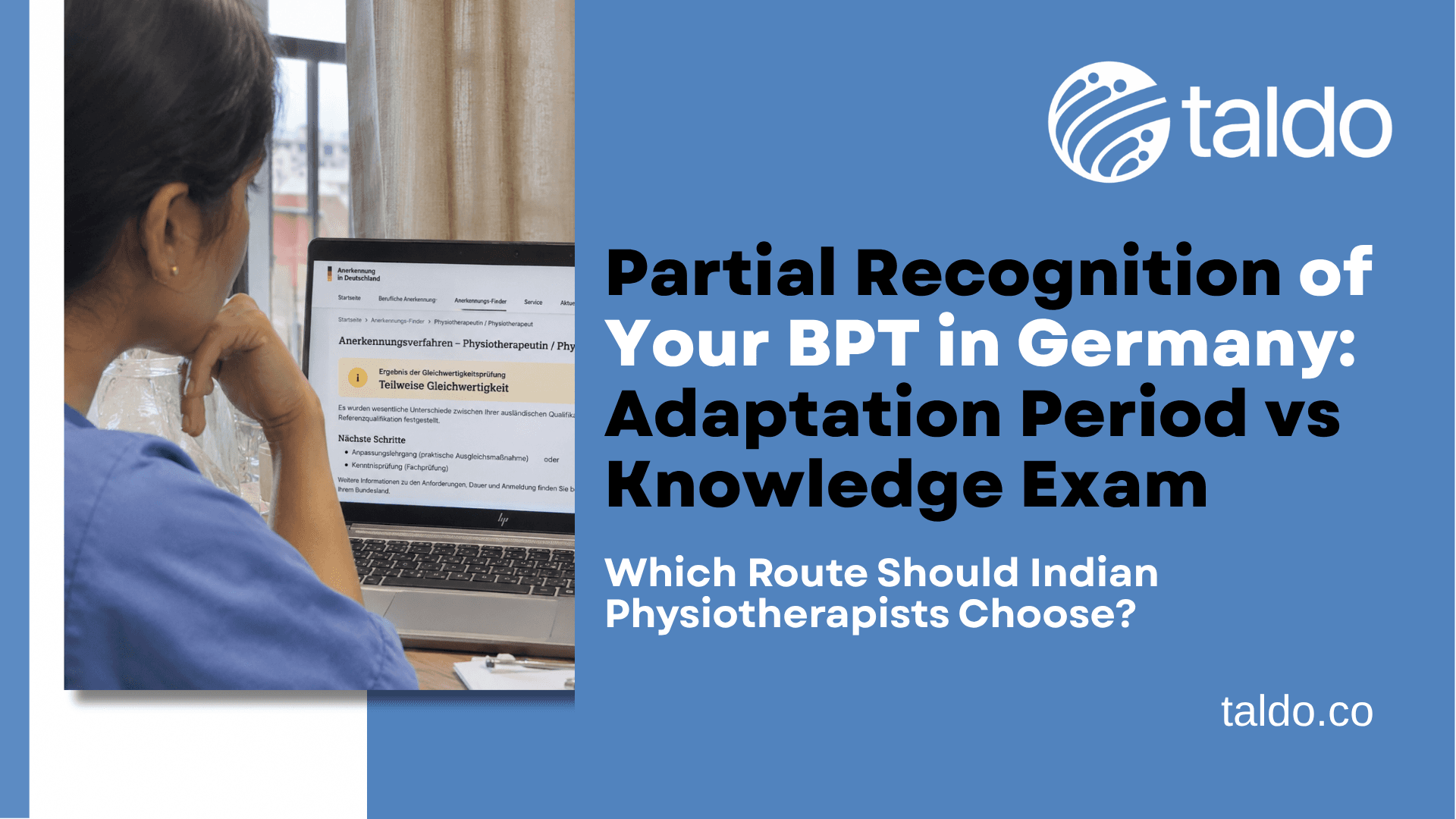
4. The Hidden Cost: Partial Recognition
Partial recognition is the biggest variable in the budget. If the authority finds substantial differences, you must complete either an adaptation period or a knowledge exam. Costs depend on the route:
| Route | Possible costs | Things to check |
|---|---|---|
| Adaptation period | Often little direct fee, but you may earn a supervised-role salary rather than a full one | Pay terms in writing, placement quality |
| Knowledge exam | Exam fee, preparation course or materials, possible retake | Number of attempts allowed, exam dates |
We compared both routes in detail in our article on partial recognition of the BPT in Germany. From a budgeting point of view, it is wise to hold a buffer for this possibility instead of assuming full recognition. Some employers also contribute to these costs, so it is worth asking early.
5. Visa, Flight and Insurance
The national visa for employment carries a fee of about €75. Appointment availability matters more than the fee itself, because delays can extend your timeline and your rent or living costs in India. A complete file helps you avoid repeat appointments, and our timeline for moving to Germany as a physiotherapist shows how the visa stage fits with recognition and job offers.
For flights, a one-way economy ticket from India to Germany typically costs ₹35,000 to ₹75,000, depending on season, airline and how early you book. Booking after your visa is issued, but not too late, usually strikes the best balance. Interim health or travel insurance for the first weeks costs a few thousand rupees until statutory insurance starts.
6. Setting Up in Germany
Your first month in Germany is where cash flow is tightest, because you pay several costs before your first salary arrives:
| Setup cost | Typical amount |
|---|---|
| Rental deposit | One to three months' basic rent |
| First month's rent | €400 – €800, depending on city and sharing |
| Public transport pass | €50 – €60 per month |
| Phone and internet | €30 – €50 per month |
| Groceries for the first weeks | €200 – €300 per month |
| Household basics | €100 – €300, depending on what you bring |
Rent is the biggest variable. Smaller cities and towns, where many clinics and rehabilitation centres recruit, are often much cheaper than the big cities, and shared accommodation lowers the cost further. Where you work shapes this too, so our guide to where physiotherapists work in Germany is useful when picking a region and employer type that suits your budget.
What Employers May Cover
Some employers help with parts of the move, such as recognition fees, relocation support, temporary housing or language course costs. This varies widely, and any support should be written into your contract, not left as a verbal promise. When you compare offers, ask exactly which costs the employer covers, whether any repayment applies if you leave early, and how long support lasts.
Is the Investment Worth It?
The upfront cost is real, but so is the income gap. A recognised physiotherapist earning around €2,300–€2,600 net per month, spending €1,000–€1,400 on a careful budget, can plausibly set aside several hundred euros every month. At that rate, many people recover their moving costs within the first year or two, depending on city, lifestyle and the route to recognition. If you are weighing other destinations, our comparison of Germany and the Gulf for Indian physiotherapists looks at salary, visa and long-term options side by side.
Ways to Keep Costs Under Control
- ✦Compare language options. Fees vary, and a good online or hybrid course can cost far less than a premium classroom programme.
- ✦Book exams when you are ready. Retakes are the most avoidable expense.
- ✦Prepare all documents in one batch. This saves repeated translation and certification fees.
- ✦Plan for a buffer. Keep funds aside for partial recognition, visa delays or an extra month of rent.
- ✦Choose your region wisely. Smaller towns often stretch your first salaries further.
- ✦Ask employers about support early. Do this before you accept an offer, not after.
Plan Your Budget With Real Guidance
Your own total depends on your language starting point, your state, your recognition outcome and your employer. Taldo works with German employers and guides Indian physiotherapists through language preparation, recognition and placement, so you know what to expect at each stage. You can message the Taldo team on WhatsApp to talk through a budget that fits your situation.
Q: How much does it cost to move to Germany as a physiotherapist from India?
Most physiotherapists spend roughly ₹1.5 to ₹4.5 lakh before leaving India, covering language courses, exams, documents, recognition fees, visa and flight. After arrival, plan for about €1,000 to €2,000 for deposit, rent, registration and basic setup. Exact totals depend on your route and city.
Q: Will my German employer pay for my move?
Some employers cover or share costs such as recognition fees, relocation or temporary housing, but this varies widely. Always ask exactly what is covered, whether repayment applies if you leave early, and make sure any support is written into your contract.
Q: How long does it take to earn back the cost of moving?
After recognition, a physiotherapist can earn roughly €2,300–€2,600 net per month and, with a careful budget, may set aside several hundred euros each month. Many people recover their moving costs within the first year or two, though this depends on your city, lifestyle and how smoothly recognition goes.